The situations that justify an upgrade to 200 A: EV charger, major renovation, tripping breakers, and how the job actually unfolds.
| Situation | What it suggests | To validate on site |
|---|---|---|
| Electric vehicle charging station to install | Capacity assessment almost always needed | Load calculation and free panel space |
| Breakers tripping several times a month | Overloaded circuit or fault to locate | Written diagnosis before any replacement |
| Major renovation involving kitchen or extension | Capacity to revisit based on new appliances | Circuit plan drawn up with the electrician |
| Older panel, fuses or discontinued brands | Compliance assessment recommended | Actual condition of the equipment during an inspection |
What 100 A means, and what it doesn’t
Your electrical service rating is the total power available at once for the whole house: heating, cooking, hot water, dryer, and now possibly a car. A 100 A panel was long the standard for a mid-sized all-electric home, and it remains adequate for many dwellings.
The key point: there is no automatic rule saying “100 A = replace”. Everything depends on your home’s actual loads and the ones you plan to add. It is a load calculation, performed by a professional on site, that settles the question: not the label on the panel.
Conversely, a 200 A panel improves nothing by itself if your needs are modest. Replacing working equipment purely “for peace of mind” is rarely justified spending. The right question is not “what’s the maximum?” but “what am I plugging in next year?”.
The situations that tilt toward 200 A
First classic case: the electric car. A home charging station adds a significant continuous load, and it is often what makes the math tight on a 100 A service: especially when heating is electric too.
Second case: major renovation. A redesigned kitchen with electric range and dryer, a new central heating system, a pool or hot tub, an addition: each large appliance draws heavily, and demands stack up.
Third case: symptoms. Breakers tripping repeatedly, lights flickering when big appliances start, or a panel already full where you must “unplug something to plug something else in” deserve an assessment. These clues do not by themselves confirm you need 200 A: they confirm you need a diagnosis.
How a panel replacement actually unfolds
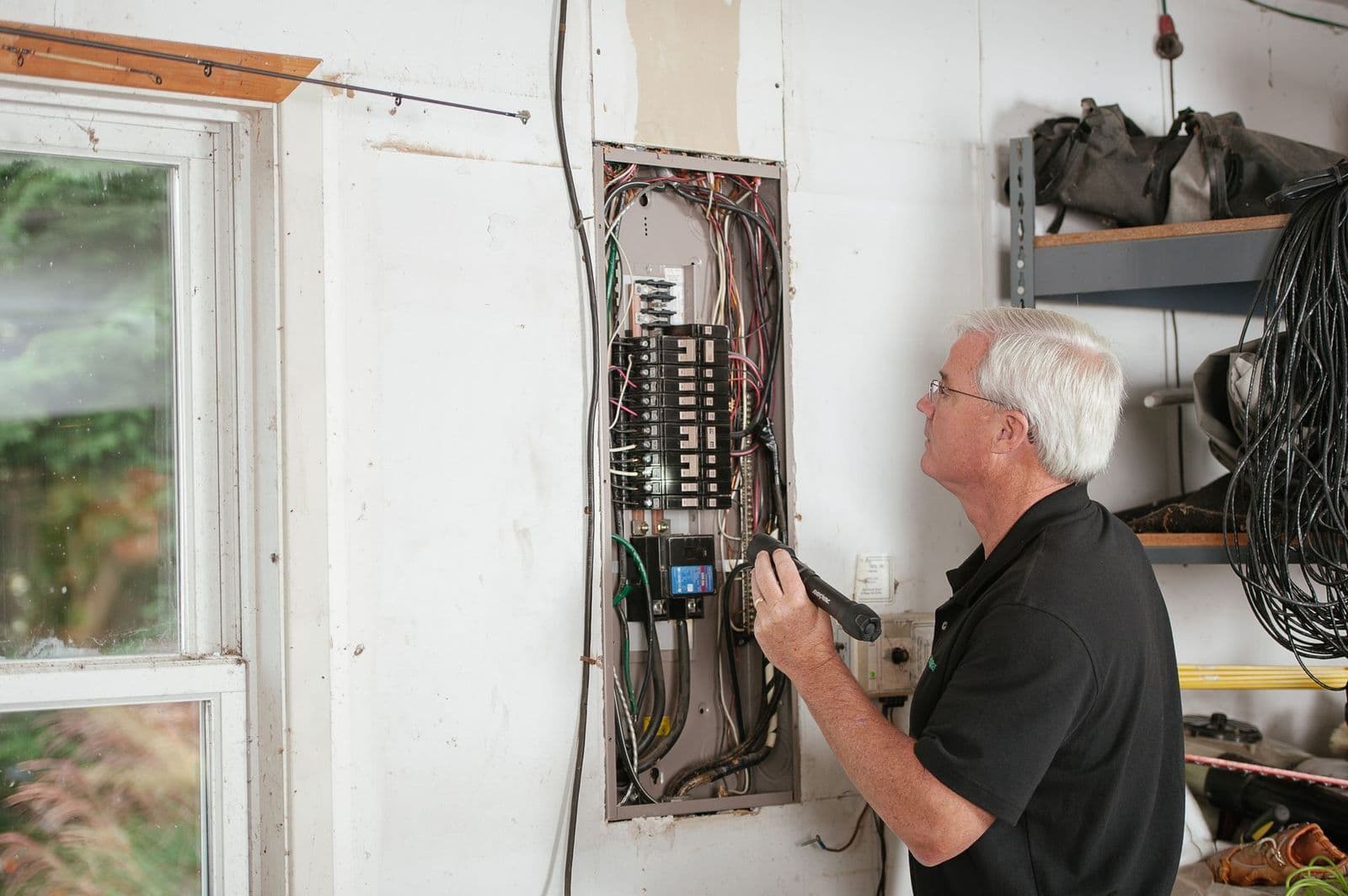
A panel replacement always starts with a site visit: load calculation, condition of the service entrance, circuit count, overall compliance. That is where 200 A gets confirmed as relevant, or where a narrower fix proves sufficient.
On work day, power is off for several hours: Hydro-Québec typically intervenes to disconnect then reconnect the service, and the municipality usually requires a permit plus an inspection afterwards. Plan the day accordingly, fridge closed and sensitive equipment shut down.
On who does the work, let us be precise: electrical work in Quebec is reserved for people holding the required qualification for its scope. For a project like this, deal with a verified RBQ-licenced contractor whose electricians hold their trade certification. Ask for the written quote, the permit and warranties before signing anything.
Budget, timelines and pitfalls to avoid
How much does it cost? Any figure published here would be misleading without seeing your installation: distance between meter and panel, service type, existing wiring condition and municipal requirements change the bill entirely. Treat every estimate as an indicative range to be confirmed on site, after the visit.
Beware of prices quoted over the phone without a visit. Panel replacement is work that touches your home’s service entrance: a firm price comes after diagnosis, not before.
Last pitfall: indefinitely postponing a real problem. Breakers tripping constantly are more than an annoyance: they signal a circuit working beyond its limits. Getting the situation assessed quickly costs less than handling a major outage or an insurance issue tied to a non-compliant installation.
Verified and sourced
Verified on September 27, 2026
Official sources
What these numbers do not cover
Going from 100 A to 200 A follows an electrician’s assessment; Hydro-Québec and the municipality disconnect and reconnect the service.