| Observation | Likely meaning | Suggested action |
|---|---|---|
| A few large ants on a windowsill | Workers scouting or a nest nearby | Follow their path, note entry points |
| Winged ants indoors in early spring | Swarm from an established colony | Professional inspection recommended |
| Fine sawdust mixed with debris near a baseboard or frame | Active excavation inside wood | Locate the damp area and get an inspection |
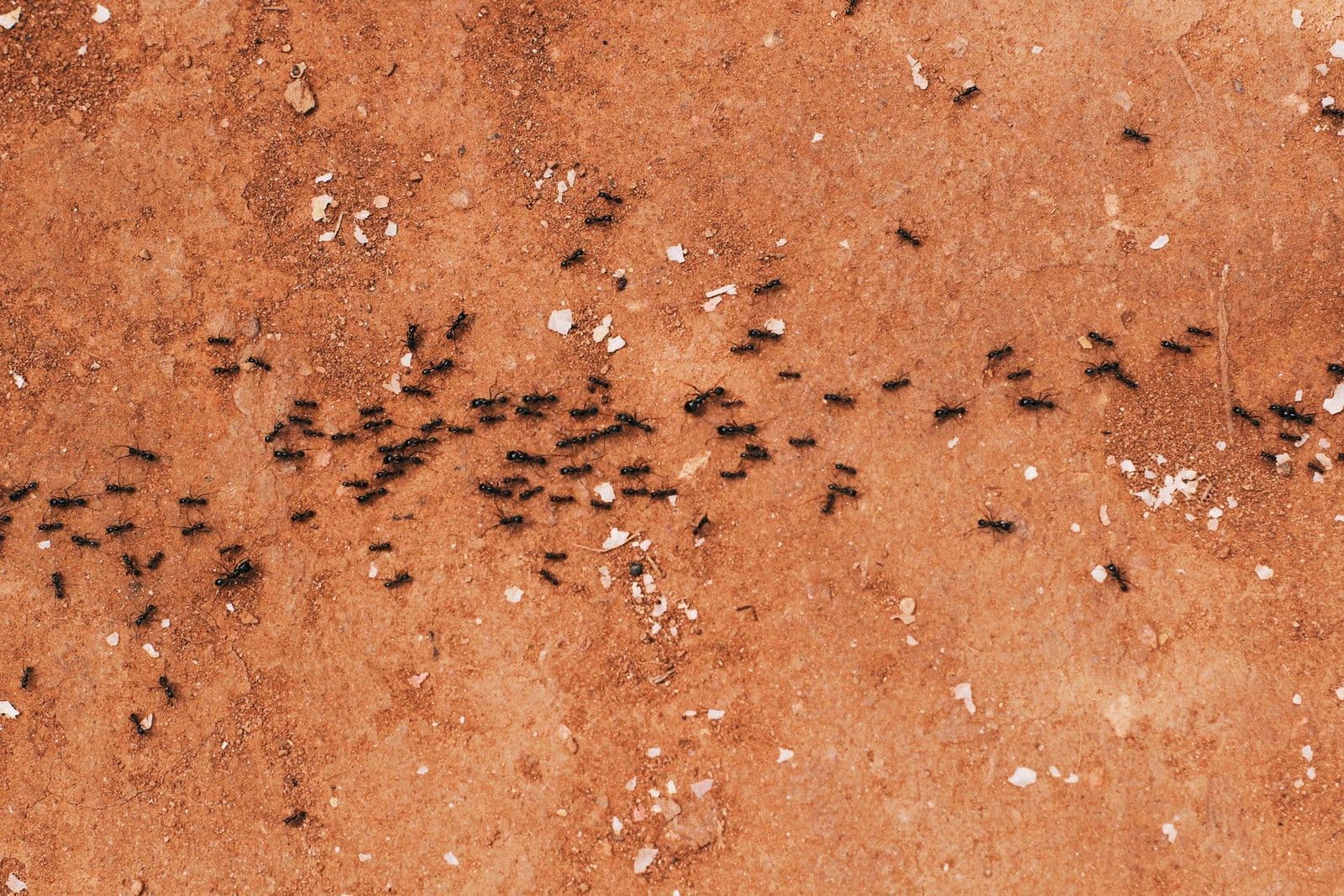
| Regular trail toward outside under a door | Column between outdoor nest and food source | Seal the entry and treat the route |
Know the enemy: carpenter ants are not little black ants
The carpenter ant is large (among the biggest ants seen in Quebec), often black or two-toned, and mostly active at night. Mistaking a simple pavement ant for a carpenter leads to underreacting; telling them apart avoids needless treatments.
The name says it all: they excavate galleries in wood to host their colonies. Contrary to popular belief, they don’t eat the wood: they prefer damp wood softened by leaks, condensation or prolonged ground contact.
Which is why effective treatment almost always has two parts: attacking the colony, and correcting the moisture that made the structure attractive. Treating without drying is inviting the next colony.
Wanderer or established colony?
A few lone workers, especially in dry spells, may be scouts from outside seeking water and food. Follow their path: they usually head back to an entry point: door threshold, cable hole, siding joint.
Signals of an established colony carry more weight: winged ants indoors in early spring (the mating swarm comes from a mature nest), fine sawdust pushed out near baseboards or frames, or faint rustling in walls at night.
In those cases, a colony (or at least a satellite colony), occupies the structure. The parent nest is often outdoors: a stump, patio border, firewood stored nearby. Treatment that ignores the parent nest merely postpones the problem to the next warm season.
What really works: inspection, targeted treatment, follow-up
The winning sequence starts with an inspection: mapping activity zones, identifying the damp wood involved, tracing the indoor-outdoor route. Without that map, treatments scatter and colonies retreat elsewhere.
Then comes targeted treatment: baits carried back to the colony by workers themselves, applications localised to activity zones, and condition fixes: repairing the leak, improving crawl-space ventilation, moving firewood away. Each element reinforces the others.
On regulation: applying pesticides in Quebec requires permits and certificates held by the applicator. Retain a competent company (a verified RBQ-licenced contractor where the scope of work requires it), and stay clear-eyed about outcomes: lasting control is built on follow-up visits, not on the promise of instant total elimination.
Preventing next season
Carpenter ants return where conditions pleased them. Trimming branches touching the house, replacing sun-split wood, ventilating enclosed spaces and fixing overflowing gutters removes most invitations.
Store firewood away from the building and raised off the ground, inspect thresholds and siding joints each spring, and seal cable and pipe penetrations. Modest gestures that outperform any preventive spray.
If you manage a rental building, add a collective dimension: an ant complaint in one unit may reflect activity in the common structure. Treating unit by unit without looking at the building extends the saga, and the service calls.
Verified and sourced
Verified on September 27, 2026
Official sources
What these numbers do not cover
The cause is almost always an infiltration to be corrected; this guide publishes neither price nor product.