Understand where it comes from, why a long-term test tells the truth, and when mitigation becomes the responsible move.
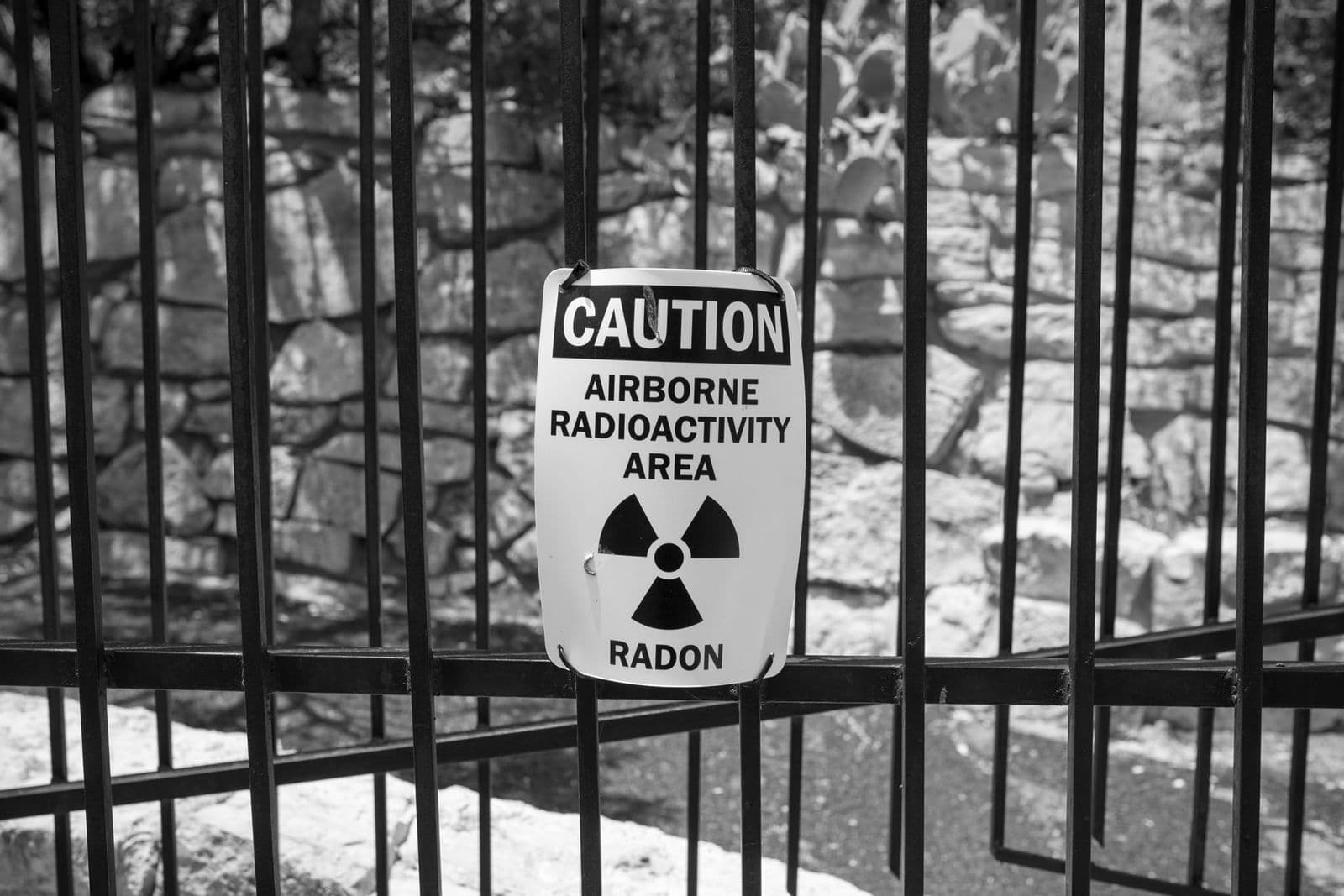
A gas rising from the ground beneath your home
Radon comes from the natural decay of uranium in Quebec soils and rock. Where a home sits on ground that releases it, the gas seeps in through any opening between soil and foundation: slab cracks, construction joints, gaps around pipes, the sump pit.
What makes radon hard to perceive is that it cannot be seen, smelled or felt, and leaves no immediate trace. A house can carry a concerning level for years with perfectly comfortable occupants before a measurement reveals the situation.
The good news is that the problem is well mapped and well understood. We know how it enters, how to measure it properly, and how to fix it in the vast majority of homes. The whole process starts with the same simple step: measure.
Why long-term testing makes all the difference
A home’s radon level varies with the hour, the weather and especially the season. In winter (windows shut and ground frozen), indoor concentration typically climbs toward its yearly peak. A reading taken on a July afternoon therefore predicts nothing reliable about your household’s real exposure.
That is why Health Canada’s guideline — 200 Bq/m³ — is written against a long-term annual average rather than a snapshot, and why Health Canada recommends a long-term test of at least three months. In practice, you favour a continuous monitoring device placed on the lowest occupied level of the home, left in place for several months, ideally through heating season.
This patience has a hidden benefit: it eliminates false starts. Measuring seriously once avoids planning work based on a misleading number: in either direction. The cost of a testing device remains modest compared with what a poorly informed decision can generate.
Typical entry points into a foundation
Radon takes every available path between soil and indoors: cracks in the concrete slab, the slab-wall joint, openings around water and gas lines, an unsealed sump pump, interior-connected French drains. The tighter and warmer the home, the more it “breathes” from below, and the harder it draws gas from the ground.
Homes with occupied basements deserve particular attention, simply because time spent on the lowest level increases exposure. A basement bedroom, a home office or a playroom change the equation without anyone noticing.
Note that a new build is not protected on principle, nor is an old one. The level depends on the geology under the house and its foundation’s characteristics, not on its year of construction. Hence the value of measuring instead of guessing.
When to act, and with whom
The time to act arrives when your long-term reading exceeds the Canadian reference (Health Canada’s), whose exact value must be validated on the official dated source. Between “just under” and “clearly above”, the decision remains yours; the higher the level and the more the basement is used, the more urgent mitigation becomes.
For the correction itself, work with someone holding a recognized measurement or mitigation certification: for example C-NRPP or an equivalent. This kind of work rests on precise principles (most often sub-slab depressurization) and an installation designed for your specific foundation.
One last, often forgotten step: after the work, measure again. A serious mitigation ends with a new long-term test confirming the result. Without that verification, you do not know whether the problem is solved: only that a system was installed.
Verified and sourced
Verified on September 27, 2026
Official sources
What these numbers do not cover
Health Canada’s guideline is 200 Bq/m³, applied to the annual average of a long-term test of at least three months; a single result cannot be compared to it, and a level below the guideline is not risk free.