The right reflexes per failure mode, and why the assessment belongs to a verified RBQ-licenced contractor.
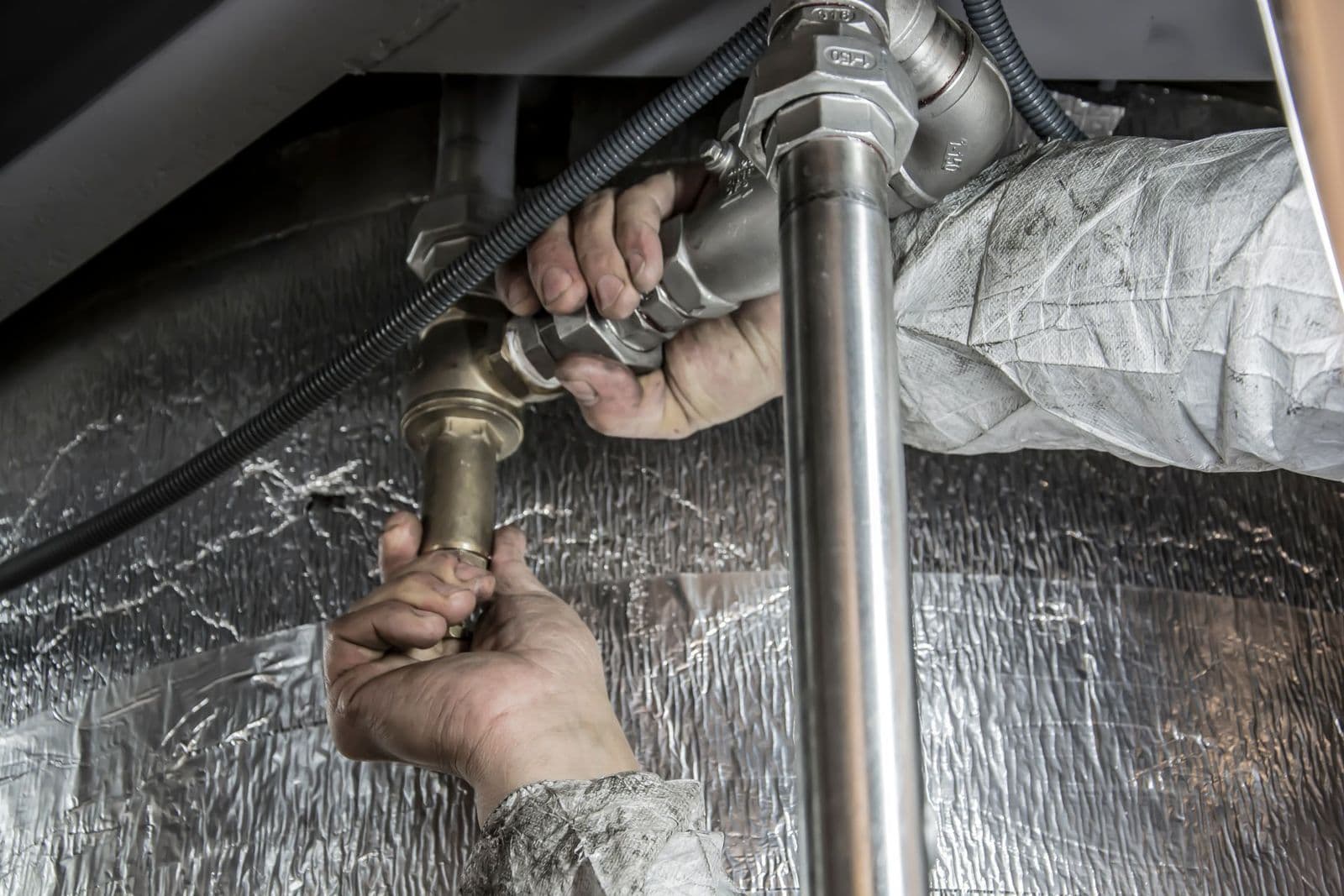
First moves depending on the failure
Water pooling at the base of the tank? Start by shutting off the cold-water feed to the heater: the valve usually sits on the line entering the top of the tank. If the leak is heavy and that valve is not enough, move up to the house’s main stop valve.
Then cut the energy. Electric heater: open the matching breaker at the panel. Gas unit: set the control to off, without touching the burner or gas fittings. That sequence (water first, then energy), prevents nasty surprises while you wait.
No hot water, yet no visible leak? Simply check whether the breaker has tripped, without opening any access panels and without touching the tank’s electrical parts. Note what you observe (lukewarm rather than hot, reduced volume, unusual noises): those details speed up the professional’s diagnosis.
Understanding what lies behind the failure
Common leak causes fall into three families: fittings and connections loosening or weeping over time, the safety relief valve releasing pressurized water, and the tank itself whose inner wall eventually gives way after years of heating cycles. Each calls for a different response.
A total lack of hot water tells another story: a failing element or thermostat on the electric side, ignition or thermocouple trouble on the gas side, or sediment buildup reducing the unit’s efficiency. Several symptoms overlap: which is exactly what makes self-diagnosis risky.
Keep one thing simple: water coming from a water heater is never trivial, and a unit showing signs of weakness should not be “tested” by forcing it. The more you document (photos of the puddle, the appliance label, the breaker panel), the more direct the visit will be.
Repair or replace: where the professional comes in
Repairing versus replacing depends on the tank’s actual condition, the precise nature of the leak and the unit’s history: information gathered on site, not over the phone. A verified RBQ-licenced contractor assesses the whole picture and proposes the soundest option, with its implications.
A full replacement involves regulated plumbing work: connections, removal of the old unit, compliance of the installation. That is precisely a duly licenced professional’s field, and the reason this step should never be handed to an unverified classified ad.
As a reference point, work on a water heater (repair or replacement), generally sits within an indicative range of $180 to $2,500 depending on the scenario. Indicative range to be confirmed on site: Nordis connects you fast with a vetted professional in your area.
Verified and sourced
Verified on September 27, 2026
Official sources
What these numbers do not cover
This guide does not price a replacement; tank age, installation and water pressure set the price.